DGUV V3/V4 inspections for businesses in the Oberland
Elektrotechnik Civan inspects fixed electrical installations and portable equipment for businesses across the Oberland, from supermarkets, kiosks and shops to offices and workshops. We also work with schools and public institutions. We agree the scope and schedule around your premises and daily operations.

Who we help
Inspections suited to your premises and daily operations
Choose the category that applies to you. The information below explains what to consider for each one.
Tenants, homeowners or existing properties
Whether you rent, own a home or manage an existing property, we first clarify the reason for the inspection, its scope and who is responsible for commissioning it. We then agree which electrical installations or equipment should be inspected.
- Clarify inspection needs after alterations or when a specific issue arises
- Include electrical installations or individual items of equipment
- For rented properties, confirm who will commission the inspection
DGUV regulations mainly concern electrical installations and work equipment in business settings. For private enquiries, we agree the appropriate inspection individually.
DGUV V3 inspections for businesses
We inspect fixed installations and portable equipment for supermarkets, kiosks, retail shops, offices, workshops and other businesses in the Oberland. The scope and schedule depend on your equipment, how it is used and your daily operations.
- List installations, tills, scanners and electrical work equipment
- Arrange inspection times to keep sales and work running smoothly
- Document results and findings for each inspected item
Schools and public institutions
For schools and public buildings, we arrange room access and inspection times around normal operations. This helps us inspect equipment systematically and assign results to the right areas.
- Record rooms, installations and equipment together
- Agree access and time slots with your organisation
- Provide inspection results in an organised format
Inspection types
Fixed installations and portable equipment, explained separately
Select an inspection type to see the typical steps and why they matter. The measurements required depend on the installation or item of equipment and its protective measures.
Fixed electrical installations
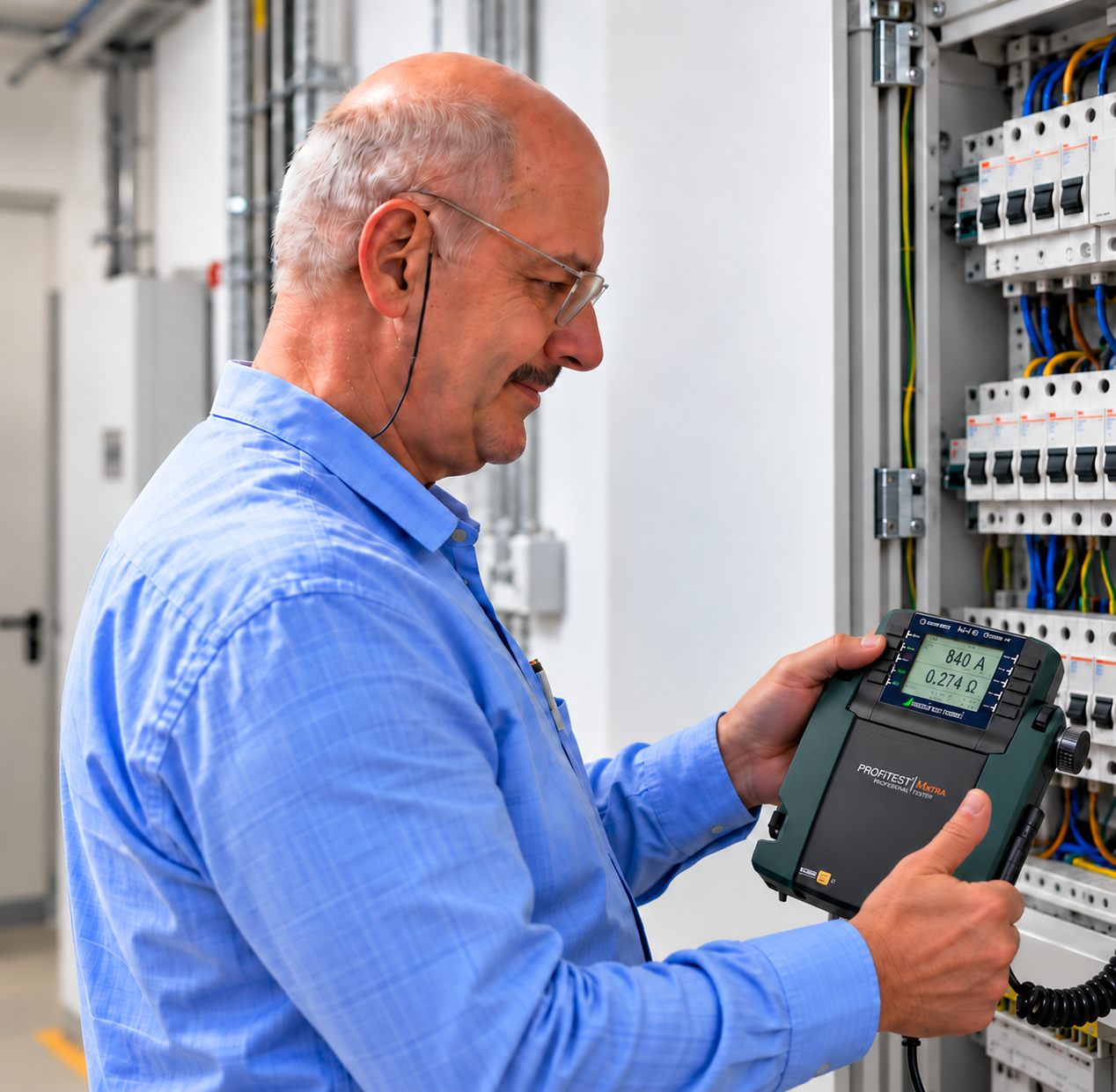
Examples include distribution boards, circuits, socket outlets and permanently connected machinery or equipment. The inspection combines a visual check with suitable measurements and functional checks.
This can reveal faults that are not visible from the outside, such as a broken protective conductor connection or damaged insulation.
Visual inspection
Enclosures, labels, cable routes and accessible parts of the installation are checked for visible damage and irregularities.
Check protective conductors
The continuity of relevant protective conductors and equipotential bonding connections is measured.
Assess insulation
Insulation is tested using a method suitable for the installation.
Measure protective measures
Depending on the protective system, disconnection conditions, RCD operation and other required values are assessed.
Check function and record results
Required functions are checked; test points, results and findings are recorded clearly.
Portable electrical equipment
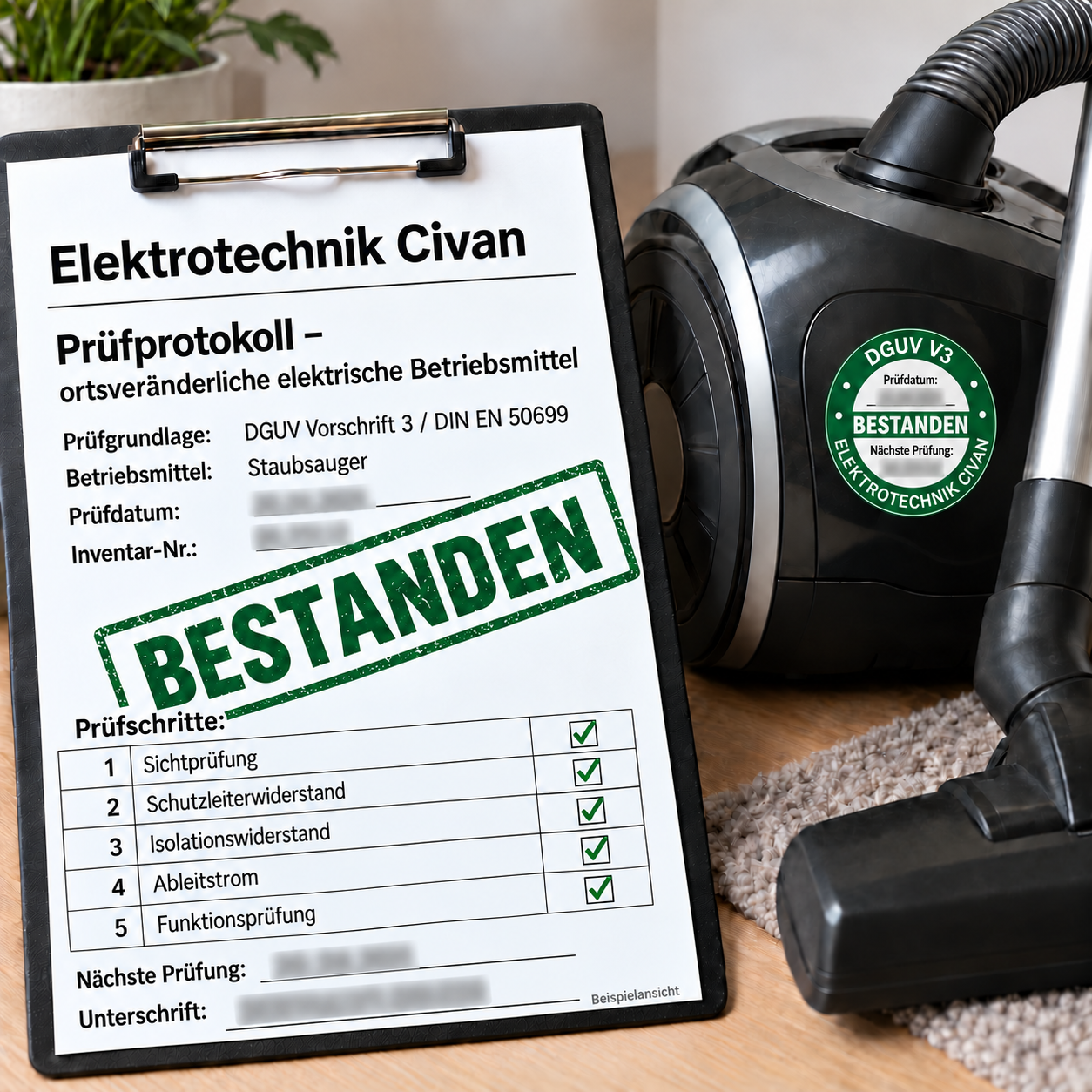
Examples include hand tools, computers, printers, coffee machines, extension leads and chargers. Each item is identified individually and assessed according to its design and protection class.
Item-by-item identification shows which equipment was tested and where a fault may need to be corrected.
Identify the item
The type of equipment and any existing identification are recorded for the item.
Visual inspection
The enclosure, power cord, plug and strain relief are checked for visible damage.
Check electrical protection
Depending on the protection class, the protective conductor, insulation or a suitable leakage-current method is tested.
Assess function
Where necessary and safe for the equipment, its function is checked.
Document the results
The result, any findings and any further action required are recorded against the item.
Repeat inspections
Inspection intervals depend on risk and use
The same inspection interval does not apply to every installation or item of equipment. The risk assessment, frequency of use, environment, condition of the equipment and previous inspection results all matter.
Fixed installations
When setting an interval, consider the type of installation, its location and the demands of the workplace. Special operating environments may require more frequent inspections.
Portable electrical equipment
For equipment, consider how often it is used, how it is moved, its cables and the surrounding environment. Previous inspection results help determine a suitable interval.
Workshops, kitchens and damp areas
Mechanical stress, heat, moisture and frequent plugging and unplugging can increase wear. A shorter interval may therefore be needed.
The final interval must match the workplace risk assessment. See our inspection process and intervals page for examples.
See inspection intervals and process →Your benefits
Know what was inspected and what needs attention next.
We agree the inspection scope with you and document the results clearly.
Agreed inspection scope
We confirm the equipment, location and schedule before the visit.
Clear results
Inspection results and any findings are documented in a clear format.
Planned around your operations
We coordinate the inspection with your team to keep disruption to a minimum.
Three simple steps
How to arrange an inspection
Tell us about your equipment
Tell us the inspection location, equipment types and approximate quantity.
Agree a date
We confirm the scope and plan the visit with you.
Receive your results
You receive the agreed documentation and a summary of any findings.
Elektrotechnik Civan · Oberammergau
Request an inspection
Tell us the inspection location and approximate quantity of equipment. We will contact you to agree the next step.